Showing posts with label médio. Show all posts

Friday, March 15, 2013

Volkswagen Golf Variant 7

Click to see in high resolutionExpect the Germans to restrict Golf only to the hatchback body would be a complete nonsense. Using a multiuse platform such as MQB certainly saves a lot of new cars’ projecting time, which has certainly had a huge responsibility for VW Group having released five of them in such short time, since the latest Seat León. Now it’s time to turn the spotlights once again to the parent brand, because even though this car family isn’t too big, it never misses a chance of having another complete rearrangement.

Volkswagen’s most successful nameplate has been divided in two “groups” since it was five, in 1979. While Opel and Renault, for example, name each member of a car family after the oldest, like Astra Caravan or Mégane Coupé, there are automakers like the North-Americans, which used to sell the same vehicles under different marques, like all the ones who came from the “Project J” around the world. “The Golfs”, however, had the sedan called Jetta since its first generation and using slightly different design, while the station wagon used to follow the hatchback. This situation only started to change at the third phase, when the sedan was called Vento in some countries. The fourth phase, in turn, not only changed this alternative to Bora as also requested the wagon for itself: the biggest sibling still adopted Golf’s front fascia in some markets but others received it with Jetta’s looks, always being badged as the “donor’s” Variant version. The fifth generation actually unified the family for the first time, with all members having one design only changed to each body’s rear, but their bigger sophistication leap raised the prices so much that the situation ended going berserk once again – today, Golf is at the seventh phase to stay as VW’s flagship vehicle, Jetta received an exclusive sixth one focusing on markets such as Brazil and United States and Variant was facelifted at the fifth. Not to mention all the original Bora’s variations still sold in other countries.

Volkswagen Golf Variant 7Nevertheless, it seems the MQB platform will restrict this strange badge engineering once again to nameplates. Giving Variant an entirely new generation may look unnecessary because midsize station wagons don’t have too big sales, but it wouldn’t be surprising if producing this one ends up easier than keeping the older. Despite the obvious advantage of offering a more modern vehicle, having Jetta in a totally separate lifecycle frees VW to enjoy nothing but the good part of a strategy this blog has mentioned with Kia pro_cee’d’s article. Golf’s design has a very horizontal roof with abrupt ending, which would demand several changes to be transformed into a sedan… but very few to create an SW. In fact, it was only a matter of adapting the rear windows to include a subsequent third glass and “stretch” the sheetmetal’s original lines. It’s really nice to see how the new Variant combined creases, volumes and glass to look elegant without looking too long like the previous phase. The new structure didn’t give big dimension increases but a surprising 231-pd weight reduction and a 21.3-cu-ft trunk, which can be expanded to 57.2 cu-ft by folding the rear seats. The pictures show the interior is shared with Golf as much as the powertrain, which uses EA-211 and EA-288 families respectively with gasoline and diesel but both with turbo, direct injection and start/stop system and the available DSG transmission.

Read more > Volkswagen Golf Variant 7

Mitsubishi L200 Triton HLS

Mitsubishi L200 TritonSe alguns modelos do mercado brasileiro merecem críticas por não oferecer diferenciações importantes em sua linha, a picape deste artigo é uma exceção muito agradável de ver. Ela chegou como importada, ainda nos anos 1990, mas desde que ganhou produção nacional ganhou uma linha completa, que ainda se estendeu com a geração atual. Seja em motores, níveis de acabamento ou mesmo tipos de cabine, várias das opções dessa picape são exclusivas no mercado. Agora você poderá conhecer sua adição mais recente.

Manter tais variações em grande quantidade se torna importante também porque mantém o carro atraente à clientela. Modelos utilitários em geral cumprem ciclos de vida mais longos que o de um carro urbano porque os desejos dos seus compradores são diferentes. As preferências deste mercado sempre passam por estilo atraente e bastante tecnologia embarcada, mas a parcela do público que faz mesmo as menores incursões fora-de-estrada dá grande valor a projetos mais tradicionais, de qualidade e resistência comprovadas. Isso é o que explica que as picapes médias levem cerca de quinze anos para trocar de geração, e é exatamente este motivo que, por sua vez, compõe uma diferença que divide o segmento das picapes médias brasileiras em dois “batalhões”. Modelos como Chevrolet S10 e Ford Ranger acabaram de receber uma fase nova, de forma que os próximos anos terão a eles como referências em design e modernidade de projeto. Já Nissan Frontier e Toyota Hilux acumulam alguns anos desde a última grande mudança, tempo que por um lado lhes trouxe a confiabilidade por parte do público que ainda não tinham nas gerações anteriores, mas que por outro lhes faz necessitar de cuidados diferentes por parte da marca, para que se mantenham atrativas nesta segunda metade do ciclo de vida.

Mitsubishi L200 TritonLançada mundialmente em 2006, a L200 Triton já está no segundo grupo também no Brasil. Por mais que suas linhas imponentes continuem negando dissimulando o passar do tempo sem problemas, a picape já recebeu um facelift leve e, mais recentemente, voltou a investir em ampliar sua linha. No ano passado chegaram versões de off-road pesado, com caçamba estendida e com motor V6, todas essas opções exclusivas em seu segmento nos dias de hoje. Agora chega a vez de integrar o grupo com motores bicombustíveis, com a nova versão HLS. Partindo de R$ 79.990, ela se restringe à tração 4x2 e à transmissão manual de cinco marchas, mas traz o motor 2.4 16v flex de até 142 cv de potência às 5.000 rpm e torque de 22 kgfm às 4.000 rpm, usando álcool – tais números se devem ao fato de que em uma picape a prioridade em um motor é o torque. Além disso, a lista de itens de série desta versão inclui ar-condicionado, conexão Bluetooth, direção hidráulica, duplo airbag, freios com ABS e EBD, rodas de 16” com pneus 265/70 R16, sistemas de entrada sem chave e som multimídia, e vidros elétricos. A nova motorização também será oferecida na versão GL, esta exclusiva para frotistas.

Read more > Mitsubishi L200 Triton HLS

Hyundai ix35 Fuel Cell

Click to see in high resolutionAfter debuting at the last Paris Motor Show, Hyundai’s latest ecologic initiative had its production started at the South Korean plant. These pictures may show only a slightly redesigned version of this famous crossover, but the truth is this release earns huge importance simply by remembering of its historical context. This ix35 won’t even be offered to the public right now, but this article will show why it can be seen as part of the car industry’s next big step towards the non-pollutant vehicles.

You’ve certainly seen lots of “green” cars being showed in the past few years. Existing vehicles receiving versions with one of the new propulsions, their automakers creating whole new models, to work with electric or hybrid projects from the project’s beginning, and even whole new companies being founded, relying exclusively on the sales appeal of producing only petrol-free transportation. Unfortunately, there are so many difficulties on establishing such big changes into the public’s habits that only some of those pioneers achieved true success. The bright side of all those attempts is that people actually started to get used to these two new kinds of car a little more, while the companies began to offer better-looking and more capable vehicles at smaller prices. In other words, introducing new technologies depends very much on the public acceptance, but also on how good are the offered vehicles: both sides need to get closer, in order to meet at the halfway called good sales. This is what first happened to hybrid propulsion, what is happening to electric vehicles and now is about to start with the hydrogen systems. There aren’t so many concrete results concerning this technology, like Honda FCX Clarity, but that’s just a matter of time.

Hyundai ix35 Fuel CellFuel Cell’s exclusive front fascia features a bigger, single-element grille whose imponent design has huge resemblance with the bigger brother Santa Fe. Besides, there are minor external changes such as the dark-painted wheels, but the car’s design wasn’t significantly altered. But another fact is these changes do bring once again the “novelty sensation” it’s always nice to have in any car, not to mention it follows Hyundai’s interesting strategy of distinguishing its petrol-free versions with exclusive designs like this one. This crossover actually uses electric propulsion, with a lithium-ion 24-kWh battery, but the new system was given the role of providing the necessary energy by converting hydrogen into electricity and managing to provide interesting a 365-miles range without recharging, along with 12s5 acceleration time from 0 to 60 mph and 100 mph of top speed. The Korean automaker will start offering this car only for companies and government institutions, always in the European market until 2015. The expectations for that time are to have these cars’ production costs lower and the demanded infrastructure improved enough to stimulate offering hydrogen-moved vehicles to the public. Until then, Hyundai will produce 1,000 units of this special ix35.

Read more > Hyundai ix35 Fuel Cell

Sunday, February 24, 2013

Kia pro_cee’d 2

Click to see in high resolutionThe concept of car family was founded around the 1970s, but became truly popular two decades later. Consists in entering multiple categories by deriving their respective body variations from one single car, enabling the automaker to promote only one identity at that price range. However, as the two-door E-Class’s article shows much better, prospering with this concept requires deep studies. One of its results, in fact, turned into the latest trend among the hatchbacks, which Kia has started to follow with the new pro_cee’d.

Do you remember when the ideal was to release taller hatchbacks in order to offer bigger internal space, just like what the minivans do? This trend rose in the early 2000s, with cars like Stilo, A-Class and 307 in Europe and Fox in Brazil – Volkswagen even created an additional model in 2005, Golf Plus. This concept didn’t take long to subside first because the actual minivans never stopped to exist (or to be a much better option for big families), but also for a second very important reason: being bad minivans deviated the hatchbacks from the sporty potential they’ve had for decades. The North-Americans may prefer the sedans and the Australians the pick-ups, but Europeans and Brazilians usually apply their high-performance packages on hatchbacks. Finally, one possible third reason would be the very limited “genetic predisposition”. In order to have a bigger cabin without an also big external size, these compacts needed to use rational designs, which fatally include the vans’ almost-horizontal roof line. Therefore, adapting coupés, sedans or other siblings turned impossible by the simple fact that all these designs need descending roofs. That’s precisely why the mentioned cars could only receive station wagon variations, respectively Multiwagon, SW and Variant (the latter using the original Golf) – the only possibility was to stretch them, like the Mercedes’ old extended-wheelbase L option.

Kia pro_cee'd 2However, the car fans can be happy again because the current trend could be defined as having only the good part of the first Mégane’s concept brought back. In other words, the family concept is still being used, but no longer intensely to the point of the entire line being the very same car until the central console. The second pro_cee’d won’t ever deny being cee’d’s two-door sibling, but this didn’t stopped it from offering a much more sporty design. If the four-door was already very attractive, the younger brother received elements such as the imponent crease that starts around the handles and gets really strong at the back, to the point of making the cabin look narrower than the lower portion – this muscle impression on compacts became famous most recently with VW Scirocco, which competes with pro_cee’d just like Opel Astra, Renault Mégane and the upcoming Seat León’s “coupe-hatch” siblings. The car’s interior features a driver-centered console and a very sporty combination of matte and piano-black, without any excess of chrome items. Kia will offer S and SE trims, the first one already bringing electric windows, s climate control, multimedia sound system and a large safety package, while the other adds a 7” touchscreen and several style accessories. This car won’t take long to receive the GT trim, but even that one repeats what could be this car’s only important weakness: both the 1.6L GDi (gasoline) and CRDi (diesel)’s numbers leave Kia without competing as this car’s design suggests.

Read more > Kia pro_cee’d 2

Wednesday, February 20, 2013

TagAZ Aquila

Tagaz AquilaOnce again, popular culture proves its timeless wisdom. Like with almost everything in life, sometimes it could be a great experience to do new things, or even the same ones in a different way, at least. It could be taking a different route for going to work, tasting different cuisines, or buying products from other brands. The latter example is what this article exposes. Even though many brands’ bad reputation is justified by aspects such as bad quality, Aquila wants to show the very bright side of “there’s a first time for everything”.

Have you ever heard of this automaker? It was founded in 1997 at the Russian city of Taganrog, and in the following year started to manufacture Daewoo vehicles under license. In fact, until now it has only produced other brands’ cars, such as Chery, Hyundai JAC, SsangYong and even Citroën’s – Berlingo’s first generation went rebadged as Orion M. Therefore, they deserve even bigger compliments for creating such a good-looking first car. Many young automakers try to cause better first impressions with flamboyant designs, but end up showing a car that no one would like to have. That’s what turns Aquila’s moderation interesting to see, in fact. There aren’t strangely-shaped or oversized elements, creating an overall well-proportioned style which even reminds the 1990s cars, but in a good way: sometimes, creating too complex lines results too heavy for certain vehicles. The original intention was to create a low-cost coupé for city use, but fortunately this didn’t stop TagAZ to add some items usually restricted to super sports cars, such as painting the trunk lid in piano black to resemble a central-engine car’s hood and a discreet aerodynamic kit, composed by front and side spoilers. There are some dissonances, like bubble-shaped mirrors combined to very angular doors, but the overall result is very positive.

Tagaz AquilaEntering the car once again gives the impression of going back to the 1990s: doesn’t this steering wheel remind you of cars like Ferrari 456 and Lamborghini Diablo? The cabin also applies an interesting combination of black, chrome and red, but items such as the standard single-slot sound system exposes the concern with reducing the costs. On the other side, it’s always nice to see that this car brings air conditioner, electrically-operated windows, hydraulic steering, driver airbag, sound system and heated rearview mirrors as standard equipments, with optional parking sensors and rearview camera – the latter ones were added because TagAZ listened to the opinions of some press members. What could be a problem is the powertrain: Aquila starts with Mitsubishi’s 16-valve 1.6L with 105 hp with a five-speed manual gearbox, clearly underpowered for any more intense use than at the big cities. But TagAZ keeps showing confidence on its car’s success, announcing that it’ll receive another engine option later, probably a 2.0L with 150 hp, and even a two-door version with even sportier looks. This can only lead the public to have big expectations for this car’s future, which has already begun successsy: the automaker states that its production has started last week, and there are about 7,000 requests already. And how about you: would you give this Russian coupé a try?

Read more > TagAZ Aquila

Tuesday, February 19, 2013

Seat León SC

Click to see in high resolutionEvery car fan must have at least one car which just looking to it leads to think “I bet it would be a huge success in the entire world”. Some of these potentials are squandered because the car is bad in some aspect, others because its brand doesn’t have the charisma to attract many customers… and others because its brand’s group prefers to have another vehicle taken to the foreign market. We all know that the new Golf is an excellent car, but wouldn’t be great if VW’s Spanish division was allowed to offer Leon around the world?

While some brands maintain heavy traditions when replacing a particular vehicle, others prefer to take the opportunity of projecting each time an entirely new car. León turns interesting to observe because Seat’s strategy with it acts like a halfway: the mid-size hatchback has been carrying the same name for three generations and fourteen years without even thinking of dropping this name. The first one couldn’t ever deny it arrived in 1999: the overall round, plain shapes were typical 2000s elements, while the wedged front with narrow lights and the high-deck rear remind the 1990s’ cars. Later, the second phase arrived with a much more organic design, using several strong creases only to highlight all the elliptical shapes, such as the headlights. And this time, the compass seem to have been dropped in favor of the ruler: in this generation we observe the smooth lines highlighting square elements. The nicest part is that Seat decided to extend this excellent work by giving León its very first two-door option, not only as a new version but with a whole new body. In other words, instead of only subtracting the rear doors, increasing the front ones and adapting the side panels to this, SC is actually a coupé-inspired hatchback, perfectly suitable to compete with Renault Mégane and Opel Astra.

Seat León SCAnd once again just like those others’ sporty variations, SC brings a very stylish exterior, with took advantage of VW’s MQB platform to become slightly shorter and wider than the five-doors, everything in order to improve the handling. Some might compare it to the new A3, but the fact is León once again managed to show how it’s possible to avoid the big traditions and deliver very nice products every time. The interior won’t be too focused on being spacious because this is a sporty version, but it’ll take four occupants with plenty of comfort. Besides, as it’s getting (too) usual with the VW Group’s cars, the cabin uses everything in black, gray and silver. It does create a modern impression, but adding some colored details would go really well with a car that comes from the same country as Pedro Almodóvar’s movies. But if you’re the kind of driver which prefers to see the landscape’s colors, specially as quick blurs, Seat will offer you a huge list of powertrain options: only with gasoline there will be the TSi 1.2 (85 or 103 hp), 1.4 (120 or 138 hp) and 1.8 (177 hp), while with diesel it’ll come with the TDi 1.6 (89 or 103 hp) or 2.0 (148 or 181 hp) – the latter ones will obtain very low consumption rates. The transmission options will be manual with five or six speeds or DSG with six or seven, depending on each of its three trims.

Read more > Seat León SC

Monday, February 11, 2013

Kia Forte Hatchback 2

Click to see in high resolutionIf Hyundai’s current prestige started when Sonata introduced Fluidic Sculpture, Kia’s “image boost” also came from a very successful new design language, Tiger Nose. It’s interesting to notice that even though these sister brands always share platforms and engines, each one managed to develop its own image with complete freedom and, therefore, compose its own public. After releasing Forte sedan last year, the Koreans now show the even more attractive five-door sibling. Here you’ll read why this is such an irresistible car.

While the sister always invests at plenty of creases and folds, the path followed by Kia may be more discreet in a first sight, but the fact is it only takes a closer look to be sy appreciated. Peter Schreyer’s team created an organic style, with smooth transitions between the volumes contrasting with the stronger-shaped elements. Although the Europeans have their own medium-sized Kias (the cee’d line), Forte’s styling has heavy influences from what those markets use on their cars – Alfa Romeo Giulietta and Citroën DS4 are good examples of that. But if Kia really wants to offer high-quality products, it would be a nonsense to create this Forte sibling as nothing more than a shortened-rear sedan. There are several exclusive items at this hatchback, starting with the front fascia: the famous grille became much shorter, just to create a visual connection between the headlights, in order to make room for an impressive lower intake. The sides use exclusive rear doors whose design goes against the European cousin’s: Forte doesn’t use the third window even in cee’d’s creative shape; that two-part design actually resembles DS4 once again. And when you see this Forte passing at your side, nothing says a more stylish goodbye than those gorgeous irregularly-shaped tail lights. But this car surely has much more to offer.

Kia Forte HatchbackThe interior is entirely shared with the sedan, but this is a great fact. It means this car brings good-looking console and plenty of room for five, but with the addition of a huge equipment list: it’ll be possible to drive the new Forte with items such as heated seats and steering wheel, keyless entry, leather seats and xenon headlights, divided into a couple of trim levels: EX, for example, comes with the sedan’s 2.0L with 173-hp power and 154-lb-ft torque always using a six-speed automatic transmission – the 1.8L won’t be used here. The surprise, however, comes from SX: the upmarket trim adds 18” aluminum wheels with 225/40 tires, LED tail lights, twin exhaust tips and some style accessories, which composes the perfect sporty ambiance to the turbocharged 1.6L and its 201-hp power and 195-lb-ft torque, this one offered with the same gearbox or an optional six-speed manual. This must be the very same engine as what recently was revealed to be used in cee’d GT, which gives this Forte a very important position: at least while Kia doesn’t come up with some more special variation, Forte SX will be the Korean hot hatch for the North American market, being capable of taking very famous names such as Ford Focus ST and Volkswagen GTI with the same level of attractiveness but a little less power, just like the European brother.

Read more > Kia Forte Hatchback 2

Friday, February 8, 2013

Renault Scénic 2013

Which Scénic is your favorite?There are lots of opportunities in life that lead us to notice that even the smallest facts can provoke enormous results, whether good or bad ones. Those are so frequent that even when restricted to the car world still end up a very large list. Citroën Visa, for instance, went from failure to success mostly due to a front bumper change. Honda’s moderation with the 2011 Civic, in turn, ended risking a long-time reputation in USA. Now it’s these minivans’ time to get updated, but their goal is different: they only needed a retouche d’image.

The most common thought of the people whose countries don’t offer Scénic must be “Why changing this generation so soon? I think it would still look young in a couple of years”. But the truth is it surprises even the Europeans, although for a different reason: “But this car was facelifted last year!”… Aging opinions aside, both groups can calm down with knowing more about the latter facelift. Do you remember how the cars’ design used to be mainly two-dimensional? Headlights and tail lights were kept on the front and rear panels, while the doors’ designs were started and ended only at the sides. The exceptions were more obvious, such as the roof designs for a sedan and a hatchback. Today’s design is much more complex because all the car’s sections became sy connected, and one example of that is what Renault has changed on Scénic. The front fascia of a modern car is physically constructed only by the bumper, which has also the front grille and ends outlining the lights, making it possible to perform big visual updates by changing only one part. Therefore, observing the pictures with more attention will lead to noticing that Scénic’s tail lights received new internal design while Grand Scénic’s remained untouched, but the biggest change wasn’t even complete: the front bumper was nothing but partially redesigned.

Renault Scénic and Grand ScénicThat part received a new upper grille with everything else staying the same, but why is this so important? Because this car has received the “bowtie”, which is some sort of the flagship item of Renault’s latest design language. This is very important because this automaker was starting to lack identity, mostly due to the various origins of its cars: some came from Dacia and others from Nissan and Samsung, not to mention what the simple age differences brought. But instead of very strong rules like Audi’s, Renault fortunately seems to be satisfied with having only some common items among its cars, freeing each one to maintain its own personality – actually, these minivans should’ve received this facelift right after Fluence, but had to step back in order to give space for Clio’s new generation. And as the mid-size sedan, which in fact is directly project-related to Scénic, there was no need to change more than applying the new corporate design. Both short and long-wheelbase options stayed the same elegant and classy vans, which took inspiration from Citroën’s C4 Picasso duo: the five-seater has some items with more casual look in order to resemble the sporty vehicles, while the bigger sister’s classical touch is clearly connected with the even bigger Espace. If you put them side-by-side with the other “bowtied” Renaults it would be very easy to notice their shared “genetics”, but does some of them look like a scaled version of other? The obviousness of this negative is what should be making Renault’s designers delighted.

Renault Scénic XMODHowever, it’s always nice to observe when “delighted” doesn’t mean “satisfied”. If the intention was to make Scénic look more casual in the small version, this update took this opportunity to bring the latest version of what’s already one of this car’s traditions: the light-off-road sister. Even though in nowadays the group offers crossovers, some customers still prefer a bigger car than Captur, fancier than Duster, more spacious than Koleos and more family-friendly than all of those. That’s why this version started as RX4, turned into Conquest and now arrives as XMOD: it’s easy to notice the new intentions with the more aggressive front design (by the way, once again achieved just changing the bumper) with bigger grille and imponent black-plastic protectors, which are continued by the sides and ended at a rear bumper which resembles RX4 very much. There are roof racks and an interesting traction system: since the car only has front-wheel-drive, Grip Xtend brings three driving modes for the traction control: Road, Loose Ground and Expert. Besides, the only interior update for the entire line is the addition of R-Link infotainment system, while the Bose sound system will come only at the most expensive trims. These cars will also offer new Energy engine options: they were updated to achieve 15% better consumption and emissions and, as usual, come with several power options – the most powerful will be TCe 130, with 128 hp. The new Scénic family will be officially released at the upcoming Geneva Motor Show.

Read more > Renault Scénic 2013

Wednesday, February 6, 2013

Renault Kangoo 2013

Renault Kangoo Maxi Z.E.Some months ago, everyone turned the spotlights to Mercedes-Benz and the latest member of its commercial vehicles’ line, the badge-engineered Citan. But this release also brought the memory that Kangoo, the French multivan whose project was used to create the German sibling, was completing four years at the current generation without having any style changes. Renault now takes the opportunity to give some updates which may not create design revolutions, but have a great importance to the car’s market position.

Do you know what does “kangoo” stand for? This word doesn’t have any meaning, actually. Renault used a computer program to create random pronounceable letter combinations until they liked this one, which they used to baptize their very first multivan, which came in 1998 to fight this category’ pioneers, PSA’s Citroën Berlingo and Peugeot Partner, and Fiat Doblò a few years later. But if the French twins tried to look like a conventional car as much as possible, the other two wanted to stand out in the crowd: like the Italian rival, the first Kangoo used very creative shapes and bright colors to compose a playful appearance, rather than discreet. But they all agreed to offer huge space for people and/or cargo (there were several body options) with resistant structures and inexpensive trim levels, which didn’t take long to result at a very successful quartet. They’ve started to receive the second generation around the tenth year, in which PSA only upgraded the original concept, while Fiat made Doblò much more elegant. Renault, in turn, decided to evolve Kangoo’s initial idea. The pictures show a more solid version of the first generation’s design, maintaining vivid colors and shapes but also receiving a new option: named Be Bop for passengers or Compact for cargo, it has smaller height and wheelbase, achieving a “cuter design” which makes it more suitable for companies with lighter demands.

Renault Kangoo 2013And after shrinking at the beginning, this generation received the electric Z.E. version and ended with an enlargement: the second Grand Kangoo was also an extended-wheelbase option for both uses, but also like the first one there was a big surprise concerning the design: having the cost reduction as a priority resulted at very questionable design solutions, such as brutally stretched last columns at the first and rear fenders at the second. Nevertheless, worrying about award-winning designs or not is what creates the biggest difference between Kangoo and Scénic, to keep the comparisons in Renault’s showroom. These pictures show the rational van of those, and that’s why there weren’t great investments at this facelift. The entire front was restyled in order to syncronize this car with Renault’s current design language, which includes big headlights and the already famous V-shaped grille highlighting the brand’s logo – the Z.E. version adds the blue-chrome details seen at the photos and sets the charging port under the logo. Internally, there’s new dashboard and the R-Link infotainment system. Since this car focuses at the commercial use, there’s only one gasoline engine option, the 1.2 TCe – all the others use diesel, generating from 75 to 110 hp.
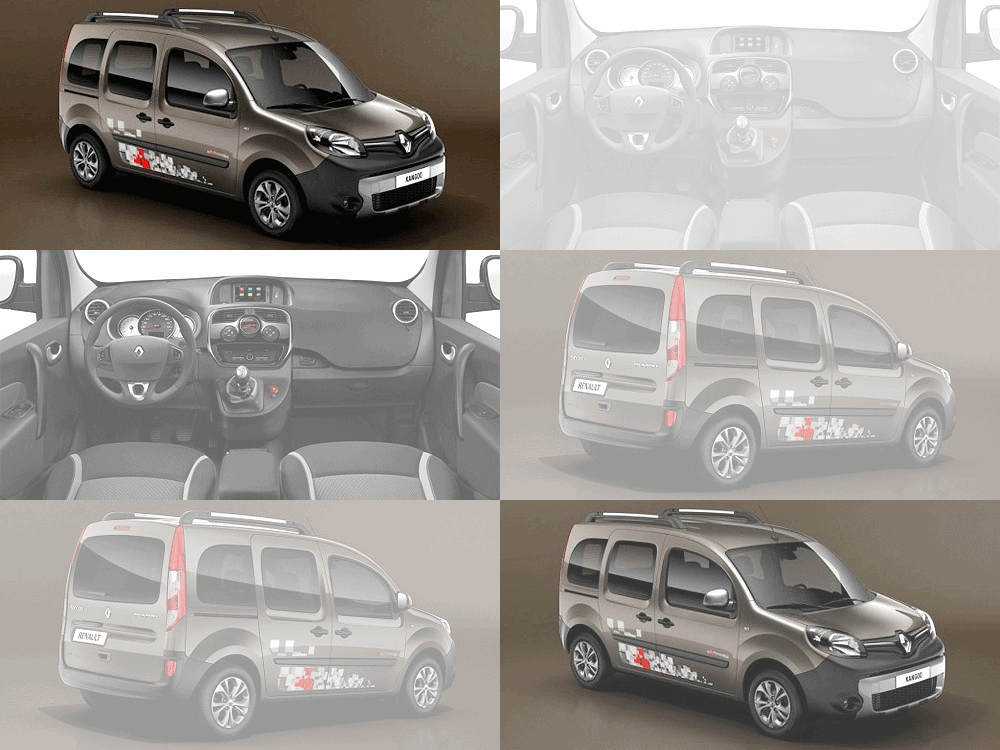
Renault Kangoo 201302/28/2012 update: Now it was time for releasing the facelifted Kangoo’s passenger version, after commercial and electric variations. The visual changes are the exact same here, but restricted to the medium-wheelbase vehicle, which has also received two new trim levels: besides Life, Zens and Intens there will be Business and Extrem. The first one is focused on companies, while the second deserved to appear in the most recent official pictures. Like PSA has done with Citroën Berlingo XTR and Peugeot Partner Tepee, now it’s Renault’s time to offer an “off-road inspiration” for this multivan, with 15” wheels, exclusive external stickers, chrome details and roof rack, while the cabin receives two-tone coating. It was also revealed that Kangoo will have hill-start assistance and stability control as standard items, with the R-Link infotainment system as an optional. The diesel engine options will actually be the same dCi 1.5L, with 75, 90 or 110 hp of power, while there will be only the 115-hp TCe with gasoline.

Read more > Renault Kangoo 2013

Monday, February 4, 2013

Opel Zafira Tourer BiTurbo

Click to see the rear pictureThis release isn’t more pleasant only as it was unexpected. Minivans are the most family-dedicated car category ever created, so they’re expected to receive items such as seven seats and DVD players for all of them. But what would be created if someone goes the other way and packs Zafira Tourer with a diesel 2.0 CDTi engine whose two turbines produce 195-hp power and 400-Nm torque, being capable of taking it from 0 to 60 mph in 8s9 and to a 135-mph top speed? According to Opel, nothing but the fastest minivan of its class.

Read more > Opel Zafira Tourer BiTurbo

Saturday, February 2, 2013

Kia Cee’d and Pro_cee’d GT

Click to see in high resolutionOnce again the European passion for hot hatches has been satisfied. The mid-sized hatchback will receive the high-performance version both in four and two doors, with a beautiful complete aerodynamic kit, featuring bigger grilles, red calipers and impressive 18” exclusive wheels, not to mention the cabin with Recaro sporty seats, aluminum items and several red details. The turbocharged GDI 1.6L uses direct injection to produce 200 hp, which leads to the 0-60 mph completed in 7s9, always using a six-speed manual transmission.

Read more > Kia Cee’d and Pro_cee’d GT

Thursday, January 31, 2013

Volkswagen Golf 4Motion

Click to see the rear pictureAfter that Scandinavian group test whose photos were spreaded all over the Internet, the first member of the seventh-generation Golf siblings is now released. The all-wheel-drive system is now produced by Haldex and became more efficient: the equipment became lighter and has faster power management between the axles according to the demand, which also results at a 4.54 l/100 km fuel consumption. This system will be initially offered with the TDI 105-hp 1.6L and 150-hp 2.0L diesel engines, with a price addition of € 1.800.

Read more > Volkswagen Golf 4Motion

Saturday, January 26, 2013

Toyota Prius

Toyota PriusEsqueça o breve período em que este carro só foi visto nas ruas da capital paulista e com a cor branca e os adesivos obrigatórios para o uso como táxi. O híbrido mais famoso do planeta agora desembarca em nosso mercado com disponível para qualquer motorista, dando mais um passo de grande importância para a introdução definitiva de veículos mais ecológicos em nosso país. Mas além de todo o enorme carisma que esse carro apresenta, este artigo irá mostrar um pouco do que faz do Prius um carro tão adorado.

Entrar no mundo dos carros elétricos e híbridos requer ver o conceito de carro de uma maneira totalmente nova. Aqui a função de transportar não tem como segunda prioridade desempenho, luxo ou preço baixo como normalmente se vê, mas sim à eficiência. Estes carros focam em realizar sua função principal com os menores consumo de combustível e emissão de poluentes possíveis, de forma que aqui são os outros aspectos que fazem concessões a aqueles. Tudo isso parece muito interessante de ver, mas já representou grandes dificuldades nos primórdios do carro elétrico moderno. A questão é que essa tecnologia só voltou a se desenvolver com mais força na década de 1990, de forma que ainda não existia nada avançado demais. Em outras palavras, o famoso Saturn EV1 e seus contemporâneos não podiam escapar de baterias caras e pesadas, autonomia curta, desenho desagradável e custos altos para comprar e manter, um pacote não exatamente sedutor. Claro que a imagem de famosos comprando carros ecológicos para uso pessoal trouxe ajuda enorme à sua popularidade, mas isso não surgiu já de início. Como as marcas continuavam a investir nessa tecnologia, ela só prosperou quando as mencionadas concessões por parte do consumidor começaram a diminuir.

Toyota Prius 1A fama mundial do Prius só foi começar com a segunda geração, de 2003: o desenho ficava muito mais caprichado, as baterias permitiam maior autonomia e a habitabilidade foi melhorada. Sem contar que neste momento já existiam cada vez mais concorrentes, como o Honda Insight. O futuro desses carros passou a ser ganhar as mais variadas melhorias, porque isso só lhes deixou mais próximos do que o cliente sempre esteve acostumado: era difícil fazê-lo trocar o carro com o qual tem costume por modelos que tinham aquelas desvantagens. Hoje em dia já se provou que tudo isso ficou no passado, primeiro para os híbridos e depois para os elétricos, mas existem concessões “menos graves” que ainda não se podem dispensar mas estão longe de trazer problemas. Um caso é o estilo do Prius: assim como em Leaf, Volt e similares, apurar a aerodinâmica é fundamental para evitar que o arrasto desperdice energia. Aqui se usa o chamado Kammback, em que a suave ascensão da dianteira à capota simula a forma ideal de uma gota, mas termina num corte traseiro bem abrupto; é provado que assim se consegue efeito muito parecido ao de prolongar sua queda até o final. Se o segundo Prius trazia visual ainda insosso, a fase atual deu grande atenção a estilizar tudo o que não implique em fugir do tal formato: itens como os farois recortados, lanternas transparentes e laterais imponentes trazem semelhança com modelos esportivos.

Toyota Prius 2Entrar em carros mais ecológicos já não impressiona tanto, e isso é excelente. Afinal, ainda não se veem ambientes de luxo, mas sim o mesmo que trazem carros a combustão com porte similar, talvez com um toque extra de modernidade por causa das telas em LCD do Prius. O modelo brasileiro traz pacote muito parecido ao dos demais com preço ao redor dos R$ 120.830 que pede, em que os destaques são bancos e volante em material sintético ecológico, sistema de som multimídia com Bluetooth e mapas, entrada sem chave, heads-up display (HUD), sete airbags, freios ABS com EBD e controles de tração e estabilidade, entre outros. Há o motor de ciclo Atkinson a gasolina e o elétrico de 650 V de potência, que combinados geram um máximo de 138 cv, com câmbio CVT. Não é um número surpreendente porque o sistema nunca chega a usar os dois motores nas faixas de potência máxima. Também existe a frenagem regenerativa, o que permite explicar o esquema de funcionamento desse carro como se vê em seu hotsite: a partida e o uso em baixas velocidades se fazem somente no modo elétrico. Em velocidade constante os dois motores se revezam segundo o que for mais eficiente, as altas acelerações usam a maior força do motor a combustão, as desacelerações são aproveitadas para recarregar as baterias e ao parar o carro se usa o sistema start/stop, que desliga o motor até que se dê um toque no acelerador.

Read more > Toyota Prius

Sunday, January 13, 2013

Hyundai i30 2

Clique para ver em alta resoluçãoVocê lembra de quando o i30 fez sua estreia no Brasil? Enquanto o Sonata começava a revolução de estilo que deu importância mundial à Hyundai, o hatch médio focou no custo/benefício para tentar firmar a marca entre nós, que até então era representada apenas pela importadora Caoa. Mas mesmo com aquelas propagandas de ufanismo cômico, o fato é que aos poucos ele conseguiu prosperar no país, ganhando uma aceitação tão grande que sua segunda geração agora chega em um contexto totalmente diferente.

Além do fato de o modelo destas imagens ser uma geração completamente nova, as diferenças entre ele e o i30 antigo têm outra razão muito importante: elas correspondem a diferentes fases da Hyundai. Lançado em 2007, o primeiro não fugia da sina que acometeu os carros coreanos nessa época: eles usavam construção moderna e já não pareciam tão antiquados como na década anterior, mas não havia inspiração. Eles eram bem diferentes entre si e não haviam muitos desenhos extravagantes ou desequilibrados, mas não chamavam atenção. Careciam de destaque, de algo que fizesse o cliente olhar para um Hyundai, Kia ou SsangYong buscando algo além de um simples meio de transporte. A fase atual do Sonata e a chegada do Kia Soul provocaram enormes mudanças nessa reputação porque as marcas aproveitaram a oportunidade para passar por uma completa melhoria. Pouco a pouco renovaram todos os modelos à venda e criaram novos e melhoraram a qualidade de construção e apostaram em projetos modernos. Isso tornou sua presença cada vez mais importante mesmo nos mercados mais exigentes, a ponto de exercer ameaça até ao mercado das marcas mais tradicionais. Hoje em dia se considera um Hyundai ou um Kia pelas mesmas razões que um Honda, Peugeot ou VW, por exemplo.

Hyundai i30Com isso, depois de se estabilizar nessa posição muito mais confortável, o começo da presente década permitiu certo relaxamento para os coreanos. Nunca no sentido de deixar seus produtos ao sabor do passar do tempo, mas sim sem a necessidade de inventar outra revolução estilística a médio prazo. Isso culmina com a nova geração do i30 porque seu lançamento mundial feito no ano passado mais uma vez comprova que a Hyundai agora se dedica a aperfeiçoar o que criou. O hatchback das fotos passa a ser uma versão dois-volumes do Elantra, para aproveitar a excelente aceitação que ele já garantiu mundo agora – aqui os nomes diferentes se mantiveram, mas nos Estados Unidos o i30 é chamado Elantra GT. Claro que nada disso impediu o i30 de ter suas particularidades de estilo, muito pelo contrário. Enquanto o irmão aposta numa profusão de cortes com formas mais arredondadas, o estilo do hatchback é mais retilíneo. Talvez para agradar os homens, a esportividade do novo i30 começa com os arcos cromados que dão uma nova interpretação à famosa grade hexagonal bipartida. Os farois esguios ainda estão lá, mas trazem um esquema interno em duas cores que combina muito bem com os vistosos farois de neblina. As laterais sugerem imponência com a linha de cintura bem elevada e em subida, e contam com muito bom gosto no recorte das janelas e na escolha de vincos. Já a traseira conta com a elegância das lanternas não tão esguias como no sedã e formas sem excesso de volume.

A cabine evoluiu muito em todos os aspectos, não só no belo desenho que mistura as cores preto e prata combinando à iluminação azul já característica da Hyundai. Até o momento o novo i30 está sendo oferecido apenas em pré-venda na rede de concessionárias, por enquanto em versão única. Ele traz airbag duplo, ar-condicionado digital, direção elétrica com três modos, freios com ABS e EBD, navegador GPS, rodas de liga leve aro 17”, sistema de som multimídia com controles no volante e sistema keyless, entre outros itens – a versão topo-de-linha agrega controles de estabilidade e tração, sensor de estacionamento e câmera de ré, entre outros. Já o trem-de-força teve mudanças dos dois tipos: o câmbio automático agora tem seis marchas, mas o motor passou a ser o 1.6 16v flex de 128 cv de potência e 16,5 kgfm de torque, que equipa o Veloster e até mesmo o HB20. Ainda se pode esperar por opções com câmbio manual e motor 2.0, esta para daqui a mais tempo, mas o maior problema do novo i30 é o preço: cobrar R$ 75.000 pela versão citada só se explica ao considerar argumentos supérfluos como o veículo ser a última novidade da marca ou mesmo que terá demanda muito grande. Sem contar que outra vez a importadora Caoa restringe a paleta de cores ao preto e ao prata.

Read more > Hyundai i30 2

Friday, January 11, 2013

Nissan Leaf 2013

Nissan Leaf 2013If you’re still amazed with how many hybrid vehicles are seen in nowadays, it’s time to catch up: the sy electric vehicles have also became so popular that they’re already creating their very own competition, apart from the first kind of ecologically-propelled. Even though the EVs market is still composed mostly of one vehicle for each brand, many of them have similar prices and therefore aim to the same customers. This was Nissan’s precise concern when giving Leaf the updates that characterize its latest model year.

Having few and very different competitors may paint the picture that the North-American EVs are an easy market to succeed, but the fact is the exact opposite. Nissan decided to enter using the most generic body for a city car, thinking it would be easy for a hatchback to attract many kinds of buyers. Chevrolet, in turn, placed their bets on a very stylish sedan with Volt. Mitsubishi created the i subcompact probably to compensate the electric systems’ higher prices with a smaller car, while Ford prefers electric versions, probably to make use of the conventional vehicles’ charisma rather than submitting new names and images to public acceptance. And Fiat combines the two last strategies with 500e. All of that came to explain that it’s very easy to lose sales at these markets: someone who wants bigger space will never take a Mitsubishi i, while the tight-budget ones won’t look to a Ford C-Max Energi. While Leaf’s sales still don’t push Nissan into creating new body versions, they’ve made some efforts at pleasing the North-Americans a little more. This car is now produced at their Tennessee plant and received some visual enhancements, such as new wheels design and color options, and a rear air diffuser, to improve the aerodynamics. Not to mention the new entry version: now there’s the upmarket SL, the mid-level SV and the cheaper S.

Nissan Leaf 2013The price reduction came from taking away the cruise control, navigation and the remote-access systems, along with smaller steel wheels with plastic covers, only one internal coating option and the 4.3” LCD screen, instead of SV and SL’s 7” one. While S’s interior only comes in black, SV receives better-quality materials in gray or black and SL uses black leather, but heated seats are now a standard item. Leaf S brings a 3.6-kW charger while the others use a 6.6-kW, this one now enabling s charge in four hours with a 220V outlet – there’s also a quick-charge port to recharge at public stations. The engine wasn’t touched, but both the heater system and the regenerative braking were improved, and the navigation system now finds the “eco routes” to the driver, which are more energy-efficient courses to a given destination. The official consumption rates haven’t been released yet, but Nissan has improved Leaf’s warranty: eight years or 100,000 miles for the battery system as always, but with a new item: the dashboard brings a capacity gauge. If this 12-bar display falls below nine bars, it means the batteries now have around 70% of the original capacity. If this is achieved within five years or 60,000 miles, Nissan will replace the battery pack. More information about this car is expected at the upcoming Detroit Auto Show.

Read more > Nissan Leaf 2013

Wednesday, January 9, 2013

Opel Antara 2013

Opel Antara 2013Some days after updating Captiva in Mexico, Opel performed little changes on the European version, Antara. The crossover was already a little different from the Latin sibling, so there was no need for another facelift – actually, it would be more worth to jump to a new generation. There are some new external color options, dual-zone air-conditioner and LED door illumination became standard items and the sound system now includes USB port and Bluetooth connection. This car uses a 2.4L engine with gasoline and a 2.2L with diesel.

Read more > Opel Antara 2013

Tuesday, January 8, 2013

Honda Civic 2.0 16v

Clique para ver em alta resoluçãoUm ano em oito dias. A Honda já havia aproveitado o último Salão do Automóvel paulista para anunciar as novidades de seu sedã médio esperadas para o presente mês, mas ainda não se tinha idéia de que elas também fariam o novo ano/modelo do Civic chegar tão cedo. Se é difícil afastar o pensamento de que manter este ritmo levaria os japoneses a chegar ao próximo réveillon na metade de uma linha 2058, as melhorias aplicadas ao seu carro-chefe têm tudo para fazê-lo merecer a atenção (e a garagem) de muita gente.

Sedãs médios já foram o objeto de desejo de muito brasileiro. A reabertura das importações abriu os olhos do país às vitrines do exterior de um modo geral, mas aqueles anos 1990 ainda viam marcas como Nissan, Peugeot, Renault e Toyota lidar com uma presença de mercado deficiente e as consequências que isso trouxe. Por outro lado, as marcas de luxo começavam a tentar a sorte entre nós, mas enquanto elas ainda se restringiam aos sedãs, peruas e cupês de alto luxo os japoneses davam a volta por cima nos anos 2000. Fizeram suas fábricas brasileiras e nos contagiaram com sua fama mundial de qualidade e resistência, mas merecem elogios ainda maiores porque o fizeram com veículos médios. Claro que os escalados foram veteranos como Ciivic e Corolla pelo carisma que acumulam há décadas, mas começar a atuar no Brasil daqueles tempos sem um carro popular não deixava de ser uma jogada arriscada. Contudo, seja pelo estilo moderno, cabine luxuosa ou motores eficientes, os japoneses não só prosperaram como começaram a incomodar as nossas montadoras mais tradicionais, porque expuseram a defasagem de seus equivalentes – elas ainda produziam resquícios do que foram suas linhas de luxo de outrora, cujos argumentos de venda convenciam cada vez menos clientes a não olhar para aqueles novatos mais modernos e de preço bem parecido.

Tudo isso fez essa década chegar à segunda metade ostentando uma frota de sedãs médios com nível maior do que nunca. Câmbio automático, computador de bordo, teto solar... Vários desses itens começaram a se tornar frequentes no Brasil graças ao sucesso desses carros, que ofereciam o máximo de requinte antes de se fazer o enorme salto de preço à seara de BMW ou Mercedes-Benz - era uma época em que marcas como a Ford não se aventuravam a subir com carros como o Fusion, e as do nível da Audi não cogitavam brigar no segmento do A1. Ou seja, o “luxo acessível” do Brasil se formava com nomes como Bora, Focus, Marea, Vectra e as gerações contemporâneas dos japoneses mencionados. Isso lhes deu a adoração de uma clientela sóbria, feita por empresários de meia-idade e em geral de situação financeira confortável, dando aos tais sedãs a reputação de "carros de patrão" ou, como satirizava a antiga campanha do Nissan Sentra, "carros de tiozão". E como toda clientela fiel, agradá-lá demandou que as montadoras respeitassem certas preferências. Você lembra, por exemplo, de quando nossos carros só emplacavam no mercado usando duas portas? Situação parecida é o que começou com os motores há uns vinte anos.

A razão pode ser a excelente fama de exemplos como o AP-2000 da Volkswagen, o Família I da Chevrolet ou os multiválvulas com e sem turbo da Fiat, ou mesmo o desejo de contraposição à fama de “carro barato” associada aos 1.0, mas o fato é que os motores 2.0 viraram o perfeito complemento à imagem de luxo que os modelos médios têm no Brasil, especialmente os três-volumes. Os benefícios do downsizing hoje já conseguem estender a boa aceitação aos 1.8, mas abaixo disso somente se tiverem algo de muito especial - é o caso dos 165 cv do 1.6 THP usado por Citroën e Peugeot. A Honda aplicou seu novo motor em estratégia parecida à do Corolla, com o 1.8 16v de agora restrito à versão LXS (R$ 66.690). Já a novidade se destina às duas superiores, que trocaram de nome para LXR (R$ 74.290) e EXR (R$ 83.890). Trata-se de um 2.0 16v i-VTEC flex de 155 cv de potência e 19,5 kgfm de torque (com etanol) com sistema para aquecer a gasolina em dias frios, dispensando o tanque secundário e sua tampa ao lado do capô. Ele também traz o modo Econ e seu botão verde no painel, e sempre estará associado ao câmbio automático de cinco marchas, cuja opção de trocas sequenciais se fará por borboletas atrás do volante. Além disso, a versão LXS ganhou um novo câmbio manual com seis marchas e mantém a opção do automático (R$ 69.900).

Read more > Honda Civic 2.0 16v

Saturday, December 29, 2012

Chevrolet Captiva 2013

Chevrolet Captiva 2013The mid-size crossover produced in Mexico has received last-minute minor updates in order to maintain its good market participation for some years. There are new 17” alloy wheels and both bumpers were slightly redesigned to became more imponent, although nothing of that changes the fact this seven-year-old project will need a new generation soon. Internally, the seats and the door panels received new coatings, and the upper rearview mirror received a small screen dedicated to the reverse-gear camera images.

Read more > Chevrolet Captiva 2013

Monday, December 24, 2012

Volkswagen Golf R Cabrio

Click to see in high resolutionSometimes, the “recipe” for creating a successful vehicle doesn’t demand millions of dollars invested in projecting new models from scratch. Complete renewals are always necessary after a certain time, but there are moments when it’s possible to make interesting additions to the showroom using mostly creativity and common sense. And since everyone likes to have good results and loves to have them without spending much money, that’s why VW decided to satisfy a popular request, now releasing this impressive convertible.

It’s interesting to observe that although Golf is a very traditional car, the families it generates on each generation never are. The sedan, for example, has followed it since the beginning but always with exclusive designs and different timing. The station wagon came only at the third phase and the fifth even had the Plus minivan variation, but the less common history surely is the convertible’s: adapting a conventional car to become roofless demands structural reinforcements and the entire removable roof system, which always raises the car’s cost. Therefore. in order to never have this cabrio too expensive, VW has used some special strategies. The second generation simply skipped this version, receving once again at the third. The fourth, in turn, was a very crafty facelift to give the new car’s front and rear styling to the older convertible. The fifth generation skipped the convertible again, and the sixth one receives it at the exact time when the seventh arrives. This doesn’t look like bad timing, though: since the new car uses an entirely different project, it seems like VW is trying to compensate the convertible’s higher costs by producing it on an already proven base. Anyway, the fact is this convertible only begins to describe a very nice example of what this article begins to comment.

Volkswagen Golf R CabrioletIn other words, besides the opportunity to keep selling Golf’s old platform for some time, since VW was releasing this very charismatic variation, why don’t take more advantage of it? Now it’s time to adapt the R version for the roofless version. There are the same elements of the hatchback, such as exclusive bumpers with more aggressive intakes and double exhaust tips, rear spoiler, 18” exclusive wheels (with an optional 19” set), lower suspension and the typical blue tone of the R line. The black fabric roof can be activated while driving at up to eighteen mph and takes eleven seconds to open or close. This car’s interior won’t be very different from what has been seen at this Golf’s phase, but once again the equipment list will be complete, including items such as bi-xenon headlights with daytime LEDs, performance seats and black-painted calipers, but the most awaited powertrain specifications to know definitely weren’t those: this car will bring once again the 2.0L TSi. There are 261 hp of power and 258 lb-ft of torque, paired to DSG transmission in order to achieve 6s4 from 0 to 60 mph and the electronically-limited 155-mph top speed. These numbers are so good that give this car the title of fastest VW convertible ever produced… along with a 8.26-l/100 km consumption, and the reminder that all of this was achieved with the exact opposite of projecting from scratch.

Read more > Volkswagen Golf R Cabrio

Saturday, December 15, 2012

Škoda Octavia 4

Click to see in high resolutionNow it’s no longer needed to wait until the Geneva event for this sedan. After lots of unofficial photos and a teaser, Škoda has released the first official pictures of the new-generation Octavia. If the exterior easily allows to deduce this car has some kind of relation with the Volkswagens, any quicker look at the technical specifications can finish blowing that cover. This article will use this sedan as an example of the good and the bad features that come with this strategy of designing cars so related with each other.

The original Octavia came after the Second World War, at first using the codename 440. The idea at that time was to create a resistant car without any other concerns but the lowest final price possible. However, this car came with a much more elegant design than what was seen at the other Soviet vehicles, which gave it a different status. This name was dropped in the 1970s with the end of that car’s production and came back to life only twenty-five years later. The automaker was already bought by Volkswagen, making Škoda their “pragmatic” division almost like what Renault does with Dacia. Describing this concept needs wider-meaning words than “low-cost” because they aren’t restricted to the cheaper categories – Octavia, for instance, is a mid-size sedan. Their public is much more rational, giving away design and performance extravagances in exchange of a reliable, non-expensive vehicle. Until the last decade this idea used to imply maintaining older projects or taking equipments away to reduce the price, but in nowadays these parameters have changed. Cost reduction is now considered since the car’s first sketches, which enables cleaner designs, simpler construction and specially sharing as many parts as possible with other cars, from the platform to visible items, in cases like Logan and Sandero’s new generation.

Škoda Octavia 4Even though this sedan does lead to think of some kind of Rapid’s bigger brother, this is just Škoda’s good designing. It still carries a very formal appearance, but this formality is now dissociated from being old-fashioned. Octavia now has an agressive interpretation of the brand’s typical design, characterized by two bigger ideas: the overall design is based mainly on straight lines, while each element has individually became a little irregularly-shaped. This means a proportion change, which still makes the car resemble the current Jetta or Exeo but with nice differences, such as the much more creative rear window cut. But if someone is already wondering where’s that mentioned parts' sharing, the answer isn’t hard to explain: MQB platform. Since its previous uses were at Seat León, VW Golf and Audi A3, this is the very first sedan to use Volkswagen’s modular platform. This allowed some dimension increases to Octavia, resulting at bigger cabin and trunk space. In fact, entering the car reveals an even bigger déjà vu if you have already driven any current VW car: there are simple lines which will certainly repeat the excellent construction quality, although Škoda seems to leave the other colors to the group’s other brands – even the touchscreen’s software seems to be restricted to black and gray. This car will offer four TDI engine options with diesel and four TSI with gasoline, these ones including a low-consumption 1.6 and a high-performance 1.8.

Read more > Škoda Octavia 4
 
 
Copyright © blog
Blogger Theme by Blogger Designed and Optimized by Tipseo