
A few days ago, Mrpolie asked if there's a way to hide the author comments in the Recent Comments widget so that we would be able to see only readers' comments and our replies to be hidden. So, in this post I'll be sharing with you the Recent Comments widget that comes with this function. If you want to show just blog readers' comments rather than yours, you have just to change "Blogger User" text with the surname under which you are posting.

The main features of this recent comments widget:
Now let's start adding it...
Step 1. From your Blogger Dashboard, go to Layout and click on Add a Gadget link

Step 2. In the pop-up window, choose the HTML/JavaScript widget

Step 3. Copy-paste the following code:
Recent Comments Widget with Round Avatars:
 Click to see the code
Recent Comments Widget With Post Titles (no avatars):
Click to see the code
Some changes before saving it.
- to set the number of comments to be shown, change the "5" value from the orange line
- for the number of characters, change the "67" (for the 2nd widget, it is 95) value from the green line
- to hide your comments, replace the Blogger User text TWICE with your name
- to change the size of avatar, change "50" from the blue line.
- if you don't want rounded avatars, delete this line:
Step 4. Save your widget. You're done.
Read more > Recent Comments Widget with Hide Author Comments function For Blogger
The main features of this recent comments widget:
- You'll be able to hide your comments
- Change the avatar size
- Set the number of comments to display
- Set the length of comment for the widget to display
Now let's start adding it...
Step 1. From your Blogger Dashboard, go to Layout and click on Add a Gadget link
Step 2. In the pop-up window, choose the HTML/JavaScript widget
Step 3. Copy-paste the following code:
Recent Comments Widget with Round Avatars:
Click to see the code<style type="text/css">
.rc{padding-left:24px; padding-top: 6px;}
.rc a:hover {color: #F3903E;text-decoration: none;}
.rc-ico{margin-left:-20px;margin-top:4px;float:left; margin-right:3px}
.rc-ico img {margin-top: -2px;margin-right:5px; border: 2px solid #fff;-webkit-border-radius: 100px;-moz-border-radius: 100px;border-radius: 100px;-webkit-box-shadow: 0 1px 2px rgba(0, 0, 0, .4);-moz-box-shadow: 0 1px 2px rgba(0, 0, 0, .4);box-shadow: 0 1px 2px rgba(0, 0, 0, .4);
-webkit-transition: all 1s ease-in-out;
-moz-transition: all 1s ease-in-out;
-o-transition: all 1s ease-in-out;
-ms-transition: all 1s ease-in-out; }
.rc-ico img:hover {-webkit-transform: rotate(360deg);
-moz-transform: rotate(360deg);
-o-transform: rotate(360deg);
-ms-transform: rotate(360deg);}
.rc-header{font-size: 13px;}
.rc-header a{}
.rc-body{font-style: italic; font-size:11px;padding: 0px 4px 1px 10px;border: 1px solid transparent;}
.rc-footer{font-size:11px; float: right;}
#rcw-cr {font-family: Arial,Tahoma;font-size:9px;padding-top:7px;display:block;}
</style>
<script type="text/javascript">
var numRecentComments = 5;
var maxCommentChars = 67;
var trueAvatars = true;
var urlMyAvatar = '';
var urlMyProfile = '';
var cropAvatar = true;
var sizeAvatar = 50;
var urlNoAvatar = "https://blogger.googleusercontent.com/img/b/R29vZ2xl/AVvXsEim5eE1f15rIhLbfli__b2uTFx8QTvAmhnP425jNX0R8ATnBIVts828sNLKPaLB8s96wLvdZ73ODAlrRbDRiC93JOfV2qVwi4Y8FpBng13OB9NZhG3hfueVokFWYBKXUSQ7KMpSA_pD5EYy/"+sizeAvatar+"/anonymous-Icon.jpg";
var urlAnoAvatar = 'http://www.gravatar.com/avatar/00000000000000000000000000000000?d=mm&s=' + sizeAvatar;
var txtMore = '';
var txtWrote = 'commented:';
var txtAnonymous = '';
var maxResultsComments = "";
var numPerPost = 2;
var maxPostTitleChars = 40;
var getTitles = true;
var maxResultsPosts = "";
var txtTooltip = '[user] on "[title]" - [date MM-dd-yyyy hh:mm]';
var urlToTitle = {};
function replaceVars(text, user, title, date) {
text = text.replace('[user]', user);
text = text.replace('[date]', date.toLocaleDateString());
text = text.replace('[datetime]', date.toLocaleString());
text = text.replace('[time]', date.toLocaleTimeString());
text = text.replace('[title]', title.replace(/\"/g,'"'));
var i = text.indexOf("[date ");
if(i > -1) {
var format = /\[date\s+(.+?)\]/.exec(text)[1];
if(format != '') {
var txtDate = format.replace(/yyyy/i, date.getFullYear());
txtDate = txtDate.replace(/yy/i, date.getFullYear().toString().slice(-2));
txtDate = txtDate.replace("MM", String("0"+(date.getMonth()+1)).slice(-2));
txtDate = txtDate.replace("mm", String("0"+date.getMinutes()).slice(-2));
txtDate = txtDate.replace("ss", String("0"+date.getSeconds()).slice(-2));
txtDate = txtDate.replace("dd", String("0"+date.getDate()).slice(-2));
//or: txtDate = txtDate.replace("dd", date.getDate());
txtDate = txtDate.replace("hh", String("0"+date.getHours()).slice(-2));
//or: txtDate = txtDate.replace("hh", date.getHours());
text = text.replace(/\[date\s+(.+?)\]/, txtDate)
}
}
return text;
}
if(urlMyProfile == "") {
var elements = document.getElementsByTagName("*");
var expr = /(^| )profile-link( |$)/;
for(var i=0 ; i<elements.length ; i++)
if(expr.test(elements[i].className)) {
urlMyProfile = elements[i].href;
break;
}
}
function getPostUrlsForComments(json) {
for(var i = 0 ; i < json.feed.entry.length ; i++ ) {
var entry = json.feed.entry[i];
for (var k = 0; k < entry.link.length; k++ ) {
if (entry.link[k].rel == 'alternate') {
href = entry.link[k].href;
break;
}
}
urlToTitle[href] = entry.title.$t;
}
}
function showRecentComments(json) {
var postHandled = {};
var j = 0;
if(numPerPost) {
while(numPerPost < numRecentComments) {
for(var i = 0 ; i < json.feed.entry.length ; i++ ) {
var entry = json.feed.entry[i]; if(entry.author[0].name.$t=="Blogger User") continue;
if(entry["thr$in-reply-to"]) {
if(!postHandled[entry["thr$in-reply-to"].href])
postHandled[entry["thr$in-reply-to"].href] = 1;
else
postHandled[entry["thr$in-reply-to"].href]++;
if(postHandled[entry["thr$in-reply-to"].href] <= numPerPost)
j++;
}
}
if(j >= numRecentComments)
break;
numPerPost++;
j = 0;
postHandled = {};
}
if(numRecentComments == numPerPost)
numPerPost = 0;
}
postHandled = {};
j = 0;
for(var i = 0 ; j < numRecentComments && i < json.feed.entry.length ; i++ ) {
var entry = json.feed.entry[i]; if(entry.author[0].name.$t=="Blogger User") continue;
if(numPerPost && postHandled[entry["thr$in-reply-to"].href] && postHandled[entry["thr$in-reply-to"].href] >= numPerPost)
continue;
if(entry["thr$in-reply-to"]) {
if(!postHandled[entry["thr$in-reply-to"].href])
postHandled[entry["thr$in-reply-to"].href] = 1;
else
postHandled[entry["thr$in-reply-to"].href]++;
j++;
var href='';
for (var k = 0; k < entry.link.length; k++ ) {
if (entry.link[k].rel == 'alternate') {
href = entry.link[k].href;
break;
}
}
if(href=='') {j--; continue; }
var hrefPost = href.split("?")[0];
var comment = "";
if("content" in entry) comment = entry.content.$t;
else comment = entry.summary.$t;
comment = comment.replace(/<br[^>]*>/ig, " ");
comment = comment.replace(/<\S[^>]*>/g, "");
var postTitle="-";
if(urlToTitle[hrefPost]) postTitle=urlToTitle[hrefPost];
else {
if(hrefPost.match(/\/([^/]*)\.html/)) postTitle = hrefPost.match(/\/([^/]*)\.html/)[1].replace(/_\d{2}$/, "");
postTitle = postTitle.replace(/-/g," ");
postTitle = postTitle[0].toUpperCase() + postTitle.slice(1);
}
if(maxPostTitleChars && postTitle.length > maxPostTitleChars) {
postTitle = postTitle.substring(0, maxPostTitleChars);
var indexBreak = postTitle.lastIndexOf(" ");
postTitle = postTitle.substring(0, indexBreak) + "...";
}
var authorName = entry.author[0].name.$t;
var authorUri = "";
if(entry.author[0].uri && entry.author[0].uri.$t != "")
authorUri = entry.author[0].uri.$t;
var avaimg = urlAnoAvatar;
var bloggerprofile = "http://www.blogger.com/profile/";
if(trueAvatars && entry.author[0].gd$image && entry.author[0].gd$image.src && authorUri.substr(0,bloggerprofile.length) == bloggerprofile)
avaimg = entry.author[0].gd$image.src;
else {
var parseurl = document.createElement('a');
if(authorUri != "") {
parseurl.href = authorUri;
avaimg = 'http://www.google.com/s2/favicons?domain=' + parseurl.hostname;
}
}
if(urlMyProfile != "" && authorUri == urlMyProfile && urlMyAvatar != "")
avaimg = urlMyAvatar;
if(avaimg == "http://img2.blogblog.com/img/b16-rounded.gif" && urlNoAvatar != "")
avaimg = urlNoAvatar;
var newsize="s"+sizeAvatar;
avaimg = avaimg.replace(/\/s\d\d+-c\//, "/"+newsize+"-c/");
if(cropAvatar) newsize+="-c";
avaimg = avaimg.replace(/\/s\d\d+(-c){0,1}\//, "/"+newsize+"/");
if(authorName == 'Anonymous' && txtAnonymous != '' && avaimg == urlAnoAvatar)
authorName = txtAnonymous;
var imgcode = '<img height="'+sizeAvatar+'" width="'+sizeAvatar+'" title="'+authorName+'" src="'+avaimg+'" />';
if (authorUri!="") imgcode = '<a href="'+authorUri+'">'+imgcode+'</a>';
var clsAdmin = "";
if(urlMyProfile != "" && authorUri == urlMyProfile)
clsAdmin = " rc-admin";
var datePart = entry.published.$t.match(/\d+/g); // assume ISO 8601
var cmtDate = new Date(datePart[0],datePart[1]-1,datePart[2],datePart[3],datePart[4],datePart[5]);
var txtHeader = txtWrote;
if(txtWrote.indexOf('[')==-1)
txtHeader = authorName + ' ' + txtWrote;
else
txtHeader = replaceVars(txtHeader, authorName, postTitle, cmtDate);
var tooltip = replaceVars(txtTooltip, authorName, postTitle, cmtDate);
if(!/#/.test(href)) href += "#comments";
document.write('<div title="'+tooltip+'" class="rc'+clsAdmin+'">');
document.write('<div title="'+tooltip+'" class="rc-header'+clsAdmin+'"><div title="'+tooltip+'" class="rc-ico'+clsAdmin+'">'+imgcode+'</div><a title="'+tooltip+'" href="' + href + '">' + txtHeader + ' </a></div>');
if(comment.length < maxCommentChars)
document.write('<div title="'+tooltip+'" class="rc-body'+clsAdmin+'">' + comment + '</div>');
else {
comment = comment.substring(0, maxCommentChars);
var indexBreak = comment.lastIndexOf(" ");
comment = comment.substring(0, indexBreak);
document.write('<div title="'+tooltip+'" class="rc-body'+clsAdmin+'">' + comment + '...</div>');
if(txtMore != "") {
var moretext = replaceVars(txtMore, authorName, postTitle, cmtDate);
document.write('<div title="'+tooltip+'" class="rc-footer'+clsAdmin+'"><a title="'+tooltip+'" href="' + href + '">' + moretext + '</a></div>');
}
}
document.write('<div style="clear:both;"></div></div>');
}
}
}
if(getTitles)
document.write('<script type="text/javascript" src="http://'+window.location.hostname+'/feeds/posts/summary?redirect=false'+maxResultsPosts+'&alt=json-in-script&callback=getPostUrlsForComments"></'+'script>');
document.write('<script type="text/javascript" src="http://'+window.location.hostname+'/feeds/comments/default?redirect=false'+maxResultsComments+'&alt=json-in-script&callback=showRecentComments"></'+'script>');
</script>
<span id=rcw-cr><a href=http://helplogger.blogspot.ro/2013/03/recent-comments-widget-with-hide-author.html>Recent Comments Widget</a></span>
Recent Comments Widget With Post Titles (no avatars):
Click to see the code<style type="text/css">
.rc{margin-left: 0px; padding-top: 7px; padding-bottom: 7px; border-bottom: 1px dotted;}
.rc-ico{float:left; margin-right:3px}
.rc-ico img {display:none; }
.rc-header{}
.rc-header a{color: #045FB4;}
.rc-body{font-style: italic; font-size: 12px; color: #444444; border: 0px dotted #000000;}
.rc-footer{font-size:11px; }
#rcw-cr {font-family: Arial,Tahoma;font-size:9px;padding-top:7px;display:block;}
</style>
<script type="text/javascript">
var numRecentComments = 5;
var maxCommentChars = 95;
var trueAvatars = true;
var urlMyAvatar = '';
var urlMyProfile = '';
var cropAvatar = true;
var sizeAvatar = 50;
var urlNoAvatar = "https://blogger.googleusercontent.com/img/b/R29vZ2xl/AVvXsEim5eE1f15rIhLbfli__b2uTFx8QTvAmhnP425jNX0R8ATnBIVts828sNLKPaLB8s96wLvdZ73ODAlrRbDRiC93JOfV2qVwi4Y8FpBng13OB9NZhG3hfueVokFWYBKXUSQ7KMpSA_pD5EYy/"+sizeAvatar+"/anonymous-Icon.jpg";
var urlAnoAvatar = 'http://www.gravatar.com/avatar/00000000000000000000000000000000?d=mm&s=' + sizeAvatar;
var txtMore = '';
var txtWrote = '[user] commented on [title]';
var txtAnonymous = '';
var maxResultsComments = "";
var numPerPost = 2;
var maxPostTitleChars = 50;
var getTitles = true;
var maxResultsPosts = "";
var txtTooltip = 'Date: [date MM-dd-yyyy hh:mm]';
var urlToTitle = {};
function replaceVars(text, user, title, date) {
text = text.replace('[user]', user);
text = text.replace('[date]', date.toLocaleDateString());
text = text.replace('[datetime]', date.toLocaleString());
text = text.replace('[time]', date.toLocaleTimeString());
text = text.replace('[title]', title.replace(/\"/g,'"'));
var i = text.indexOf("[date ");
if(i > -1) {
var format = /\[date\s+(.+?)\]/.exec(text)[1];
if(format != '') {
var txtDate = format.replace(/yyyy/i, date.getFullYear());
txtDate = txtDate.replace(/yy/i, date.getFullYear().toString().slice(-2));
txtDate = txtDate.replace("MM", String("0"+(date.getMonth()+1)).slice(-2));
txtDate = txtDate.replace("mm", String("0"+date.getMinutes()).slice(-2));
txtDate = txtDate.replace("ss", String("0"+date.getSeconds()).slice(-2));
txtDate = txtDate.replace("dd", String("0"+date.getDate()).slice(-2));
//or: txtDate = txtDate.replace("dd", date.getDate());
txtDate = txtDate.replace("hh", String("0"+date.getHours()).slice(-2));
//or: txtDate = txtDate.replace("hh", date.getHours());
text = text.replace(/\[date\s+(.+?)\]/, txtDate)
}
}
return text;
}
if(urlMyProfile == "") {
var elements = document.getElementsByTagName("*");
var expr = /(^| )profile-link( |$)/;
for(var i=0 ; i<elements.length ; i++)
if(expr.test(elements[i].className)) {
urlMyProfile = elements[i].href;
break;
}
}
function getPostUrlsForComments(json) {
for(var i = 0 ; i < json.feed.entry.length ; i++ ) {
var entry = json.feed.entry[i];
for (var k = 0; k < entry.link.length; k++ ) {
if (entry.link[k].rel == 'alternate') {
href = entry.link[k].href;
break;
}
}
urlToTitle[href] = entry.title.$t;
}
}
function showRecentComments(json) {
var postHandled = {};
var j = 0;
if(numPerPost) {
while(numPerPost < numRecentComments) {
for(var i = 0 ; i < json.feed.entry.length ; i++ ) {
var entry = json.feed.entry[i]; if(entry.author[0].name.$t=="Blogger User") continue;
if(entry["thr$in-reply-to"]) {
if(!postHandled[entry["thr$in-reply-to"].href])
postHandled[entry["thr$in-reply-to"].href] = 1;
else
postHandled[entry["thr$in-reply-to"].href]++;
if(postHandled[entry["thr$in-reply-to"].href] <= numPerPost)
j++;
}
}
if(j >= numRecentComments)
break;
numPerPost++;
j = 0;
postHandled = {};
}
if(numRecentComments == numPerPost)
numPerPost = 0;
}
postHandled = {};
j = 0;
for(var i = 0 ; j < numRecentComments && i < json.feed.entry.length ; i++ ) {
var entry = json.feed.entry[i]; if(entry.author[0].name.$t=="Blogger User") continue;
if(numPerPost && postHandled[entry["thr$in-reply-to"].href] && postHandled[entry["thr$in-reply-to"].href] >= numPerPost)
continue;
if(entry["thr$in-reply-to"]) {
if(!postHandled[entry["thr$in-reply-to"].href])
postHandled[entry["thr$in-reply-to"].href] = 1;
else
postHandled[entry["thr$in-reply-to"].href]++;
j++;
var href='';
for (var k = 0; k < entry.link.length; k++ ) {
if (entry.link[k].rel == 'alternate') {
href = entry.link[k].href;
break;
}
}
if(href=='') {j--; continue; }
var hrefPost = href.split("?")[0];
var comment = "";
if("content" in entry) comment = entry.content.$t;
else comment = entry.summary.$t;
comment = comment.replace(/<br[^>]*>/ig, " ");
comment = comment.replace(/<\S[^>]*>/g, "");
var postTitle="-";
if(urlToTitle[hrefPost]) postTitle=urlToTitle[hrefPost];
else {
if(hrefPost.match(/\/([^/]*)\.html/)) postTitle = hrefPost.match(/\/([^/]*)\.html/)[1].replace(/_\d{2}$/, "");
postTitle = postTitle.replace(/-/g," ");
postTitle = postTitle[0].toUpperCase() + postTitle.slice(1);
}
if(maxPostTitleChars && postTitle.length > maxPostTitleChars) {
postTitle = postTitle.substring(0, maxPostTitleChars);
var indexBreak = postTitle.lastIndexOf(" ");
postTitle = postTitle.substring(0, indexBreak) + "...";
}
var authorName = entry.author[0].name.$t;
var authorUri = "";
if(entry.author[0].uri && entry.author[0].uri.$t != "")
authorUri = entry.author[0].uri.$t;
var avaimg = urlAnoAvatar;
var bloggerprofile = "http://www.blogger.com/profile/";
if(trueAvatars && entry.author[0].gd$image && entry.author[0].gd$image.src && authorUri.substr(0,bloggerprofile.length) == bloggerprofile)
avaimg = entry.author[0].gd$image.src;
else {
var parseurl = document.createElement('a');
if(authorUri != "") {
parseurl.href = authorUri;
avaimg = 'http://www.google.com/s2/favicons?domain=' + parseurl.hostname;
}
}
if(urlMyProfile != "" && authorUri == urlMyProfile && urlMyAvatar != "")
avaimg = urlMyAvatar;
if(avaimg == "http://img2.blogblog.com/img/b16-rounded.gif" && urlNoAvatar != "")
avaimg = urlNoAvatar;
var newsize="s"+sizeAvatar;
avaimg = avaimg.replace(/\/s\d\d+-c\//, "/"+newsize+"-c/");
if(cropAvatar) newsize+="-c";
avaimg = avaimg.replace(/\/s\d\d+(-c){0,1}\//, "/"+newsize+"/");
if(authorName == 'Anonymous' && txtAnonymous != '' && avaimg == urlAnoAvatar)
authorName = txtAnonymous;
var imgcode = '<img height="'+sizeAvatar+'" width="'+sizeAvatar+'" title="'+authorName+'" src="'+avaimg+'" />';
if (authorUri!="") imgcode = '<a href="'+authorUri+'">'+imgcode+'</a>';
var clsAdmin = "";
if(urlMyProfile != "" && authorUri == urlMyProfile)
clsAdmin = " rc-admin";
var datePart = entry.published.$t.match(/\d+/g); // assume ISO 8601
var cmtDate = new Date(datePart[0],datePart[1]-1,datePart[2],datePart[3],datePart[4],datePart[5]);
var txtHeader = txtWrote;
if(txtWrote.indexOf('[')==-1)
txtHeader = authorName + ' ' + txtWrote;
else
txtHeader = replaceVars(txtHeader, authorName, postTitle, cmtDate);
var tooltip = replaceVars(txtTooltip, authorName, postTitle, cmtDate);
if(!/#/.test(href)) href += "#comments";
document.write('<div title="'+tooltip+'" class="rc'+clsAdmin+'">');
document.write('<div title="'+tooltip+'" class="rc-header'+clsAdmin+'"><div title="'+tooltip+'" class="rc-ico'+clsAdmin+'">'+imgcode+'</div><a title="'+tooltip+'" href="' + href + '">' + txtHeader + ' </a></div>');
if(comment.length < maxCommentChars)
document.write('<div title="'+tooltip+'" class="rc-body'+clsAdmin+'">' + comment + '</div>');
else {
comment = comment.substring(0, maxCommentChars);
var indexBreak = comment.lastIndexOf(" ");
comment = comment.substring(0, indexBreak);
document.write('<div title="'+tooltip+'" class="rc-body'+clsAdmin+'">' + comment + '...</div>');
if(txtMore != "") {
var moretext = replaceVars(txtMore, authorName, postTitle, cmtDate);
document.write('<div title="'+tooltip+'" class="rc-footer'+clsAdmin+'"><a title="'+tooltip+'" href="' + href + '">' + moretext + '</a></div>');
}
}
document.write('<div style="clear:both;"></div></div>');
}
}
}
if(getTitles)
document.write('<script type="text/javascript" src="http://'+window.location.hostname+'/feeds/posts/summary?redirect=false'+maxResultsPosts+'&alt=json-in-script&callback=getPostUrlsForComments"></'+'script>');
document.write('<script type="text/javascript" src="http://'+window.location.hostname+'/feeds/comments/default?redirect=false'+maxResultsComments+'&alt=json-in-script&callback=showRecentComments"></'+'script>');
</script>
<span id=rcw-cr><a href=http://helplogger.blogspot.ro/2013/03/recent-comments-widget-with-hide-author.html>Recent Comments Widget</a></span>
Some changes before saving it.
- to set the number of comments to be shown, change the "5" value from the orange line
- for the number of characters, change the "67" (for the 2nd widget, it is 95) value from the green line
- to hide your comments, replace the Blogger User text TWICE with your name
- to change the size of avatar, change "50" from the blue line.
- if you don't want rounded avatars, delete this line:
-webkit-border-radius: 100px;-moz-border-radius: 100px;border-radius: 100px;
Step 4. Save your widget. You're done.


 Falar em elegância pode fazer com que muita gente logo lembre dos farois e lanternas claramente inspirados nas luzes do Evoque, mas o fato é que a personalidade do irmão maior é muito mais profunda. Outro símbolo que provavelmente nunca vai mudar é a silhueta do Range Rover, mesmo que a combinação de teto com queda leve associado à traseira inclinada tenha tido seu auge na época da primeira geração. Esta parte guarda um detalhe interessante, aliás: enquanto vários hatchbacks exibem o chamado “teto flutuante” como um detalhe de estilo recente, o SUV inglês já podia trazer todas as colunas em preto desde a primeira geração, obtendo exatamente o mesmo efeito de fazê-las parecer unidas às janelas como um só elemento em preto brilhante, que ao não impedir o teto de manter a cor da carroceria faz este último parecer visualmente desconectado da mesma. Mas assim que você tiver conseguido desviar o olhar do incrível equilíbrio entre passado e presente que é o design exterior deste veículo, começa o momento de estender o fascínio ao interior. A fartura de espaço para cinco pessoas foi exaltada com o aumento de entre-eixos em relação ao antecessor, além de o revestimento em couro se oferecer nos mais variados tons para combinar com a igualmente ampla oferta de tipos de madeira, tudo para compor o ambiente que mais agradar ao abastado proprietário.
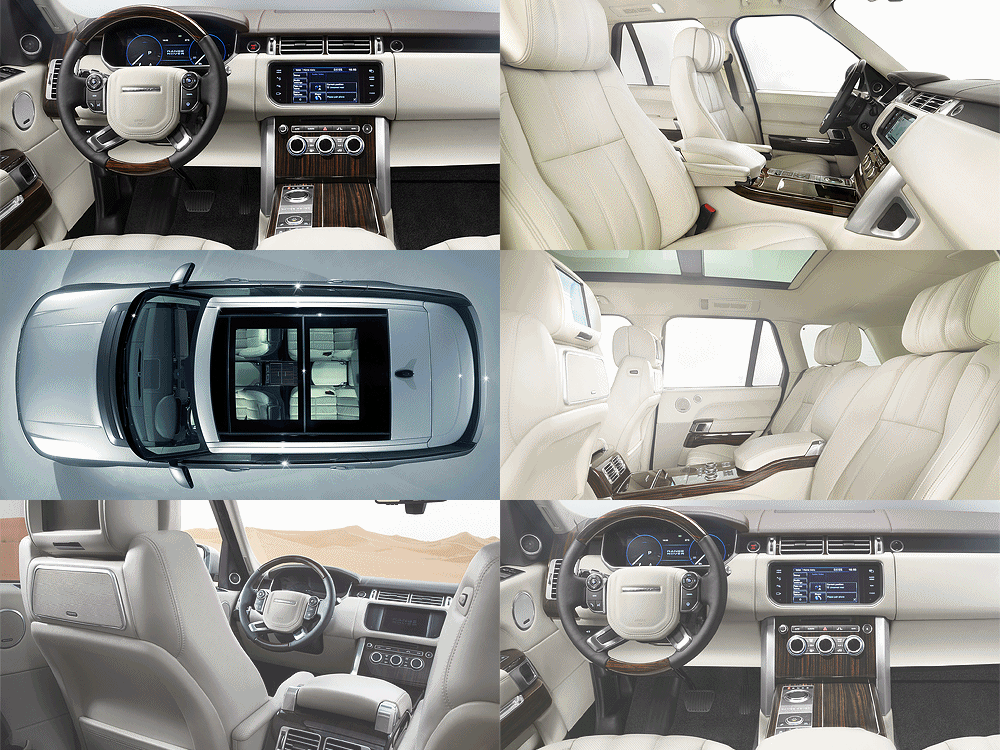 Passar à parte técnica do novo Range Rover sempre merece a menção da sua nova plataforma, que recebeu aumento na tecnologia embarcada para não só ganhar em resistência como também para uma excelente perda de peso, que em certas versões chega a 400 kg. Uma novidade ainda mais surpreendente é a evolução do sistema Terrain Response, que abandona a necessidade de o motorista alterar o modo de direção: agora é o próprio veículo que avalia a condição do terreno em que está para escolher os parâmetros mais adequados de estabilidade, suspensão e tração. Em paralelo, o interminável pacote de equipamentos inclui mimos extremos como quadro de instrumentos feito por uma tela LCD e o reprodutor de DVD para os passageiros do banco traseiro. As opções de motorização mantêm o câmbio automático ZF de oito marchas para todas as versões, que no Brasil começam com a Vogue 4.4 V8 biturbo movido a diesel, com potência de 339 cv e torque de 71,1 kgfm e preço de R$ 551.800. Ele também equipa a Vogue SE sob o preço de R$ 575.800 e a topo-de-linha Autobiography, que por sua vez fica em R$ 596.800 – este trem-de-força lhe faz acelerar de 0 a 100 km/h em 6s9 e chegar à velocidade máxima de 217 km/h. Porém, quem desejar força ainda maior pode trocar o diesel pela gasolina que move o 5.0 V8, responsável pelos 510 cv e 63,5 kgfm e pelo desempenho de 5s4 e 225 km/h, este com limite eletrônico. Esta unidade equipa as versões Vogue SE Supercharged, de R$ 583.800, e Autobiography Supercharged, de R$ 601.400.


