Showing posts with label android. Show all posts

Saturday, February 25, 2012

Dropbox Upload Pictures To Bring Android Features

Seeing the number of rivals in the business of online storage, Dropbox continue to innovate in its application, this time Dropbox launched a photo uploader feature for Android smartphones.

Unfortunately, Dropbox offers only storage space, so that service users can not edit or manipulate the images you have uploaded.
 
These features will allow users to wirelessly upload high resolution images, directly from smart phones to the virtual cloud. File has been uploaded it can then be accessed from any computer or mobile device.

Although the first release of this application will only be available for Android phones, the Dropbox promised to release a version for IOS. Users will get 500MB of storage space after the first upload them, and users can receive up to 3 GB of additional storage space.
Read more > Dropbox Upload Pictures To Bring Android Features

Acer Liquid Glow Smarphone Android ICS wwith screen 3.7 Inci

Acer Liquid Glow is a smartphone with Android OS 4.0 Ice Cream Sandwich and equipped NFC connectivity.
Acer Android Liquid Glow Smarphone ICS with 3.7-inch
Tweet 0digg 1 comment

Acer Liquid Glow is a smartphone with Android OS 4.0 Ice Cream Sandwich and equipped with NFC connectivity.


Then the phone also uses the screen 3.7 "and are equipped 5MP camera LED flash. Acer still not disclose information other specifications.

Acer plans glow liquid to be marketed in the early spring of this year with Sakura Pink color choices, Alpine White, Black and Cat's-eye.
Read more > Acer Liquid Glow Smarphone Android ICS wwith screen 3.7 Inci

Friday, February 10, 2012

History of Android OS

Android Inc., is a small software company that was founded in October 2003 in Palo Alto, California, USA. Founded by several senior at several companies based IT & Communication; Andy Rubin and Rich Miner, Nick Sears and Chris White. According to Rubin, Android Inc. was established to realize the mobile device is more sensitive to the location and owner preferences. In other words, Android Inc., wanted to create a better understanding of mobile device owners. Android history begins from here.

Google Android and History
The concept is owned by Android Inc., was intrigued giant Google to have it. In August 2005, eventually Android Inc. was acquired by Google Inc.. The entire stock was bought by Google. The value of this purchase by Google Inc. Android no exact release. But many of the estimated value of the purchase by Google Inc. Android is a $ 50 million. At that time many have speculated, that this acquisition is the initial step to get into Google's mobile phone market.
androidAndy history Rubin, Rich Miner, Nick Sears and Chris White remained in the Android Inc. that Google bought, so that eventually they all become part of the history of the giant Google and Android. That's when they started using linux platfor to make the operating system for mobile phones.History of Android and Open Handset Alliance
In november 2007, terbentuklan Open Handset Alliance which is a consortium of several companies: Broadcom Corporation, Google, HTC, Intel, LG, Marvell Technology Group, Motorola, Nvidia, Qualcomm, Samsung Electronics, Sprint Nextel, T-Mobile and Texas Instruments. They agreed to create open standards for mobile phones. On the same day, they announced their first product, the Linux-based Android kernel version 2.6.
Month of December 2008, join 14 other companies are: ARM Holdings, Atheros Communications, Asustek Computer Inc., Garmin Ltd., PacketVideo, Softbank, Sony Ericsson, Toshiba Corp. and Vodafone Group Plc. This is a major step forward in history to become a leader in the Android operating system for mobile phones.
Some of the official release version of Android:
Android 1.5 CupcakeAndroid 1.6 DonutAndroid Eclair 2.0.x/2.1.xAndroid Froyo 2.2.xGingerbread Android 2.3Gingerbread Android 2.3.3Android Honeycomb 3.0
Read more > History of Android OS

Monday, January 30, 2012

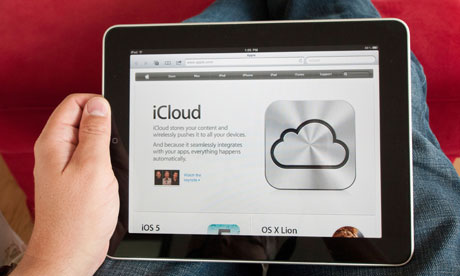
Android takes chunk of tablet market, but Apple's iPad still dominates

Android tablets took 39% of the world tablet market in the fourth quarter of 2011, according to new research from Strategy Analytics – though as many as half of those were not running Google-approved versions of the operating system, it said.
Apple dominated the rest of the market on its own, taking 58% of the market during the period as it sold 15m iPads, more than double the number of the same period in 2011.

That was down from a 68% share a year ago – but the key reason for the fall was the entry of Amazon's Kindle Fire, which uses a "forked" version of Android which does not use the Android market, though it does default to Google search.
Strategy Analytics says that the total tablet market grew from 10.7m in the fourth quarter of 2010 to 26.8m in the same period of 2011 – equivalent to more than a quarter of the total PC market for the quarter, which hit 92.7m acording to research company IDC.
Other companies such as RIM with its PlayBook managed around 500,000 sales, according to the report. Microsoft Windows 7 tablets achieved about 400,000 sales.
Peter King, for Strategy Analytics, said that he estimated that Amazon and Barnes & Noble, which offers the Nook tablet, had together sold about 4.6m tablets – which would mean that they took 40% of the total Android tablet market, and solely in the US. Total Android sales tripled to 10.5m worldwide, the company said.
Yet speaking earlier this week, Apple chief executive Tim Cook insisted that he had not seen any slowdown in iPad sales after the launch of the Kindle Fire in October.
The numbers were disputed publicly on Twitter by Benedict Evans, an analyst
a researcher
for Enders Analysis, who remarked that: "Sometimes the convention that you don't publicly criticise other analysts is a pain."
He suggested the figures for Android sales were "batshit insane", and said that it's a challenge to estimate Android tablet sales "when Samsung says nothing and Google is actively misleading".
Google does not offer clear breakdowns of how many devices have been activated by type – although any which uses the approved Google software will contact its activation servers and provide device information. Instead, it offers the "Platform versions" pages which indicate the proportion of devices using a particular version of Android that have contacted the Android Market over a two-week period.
It also collects screen size information – but that has fallen out of step with the platform version data, having last been updated on 1 December. Nor is there any indication of how often old or new devices contact the Market.
The lack of clarity is frustrating for analysts seeking to advise clients on which platforms to target for future planning. While Apple does not provide data about the software versions running on devices, it does provide quarterly updates on sales of each class of device such as the iPhone and iPad. Samsung, reckoned to be the the biggest seller of Android phones and tablets worldwide, has ceased providing that data.
"Dozens of Android models distributed across multiple countries by numerous brands such as Amazon, Samsung, Asus and others have been driving volumes," Neil Mawston, executive director at Strategy Analytics, noted. "Android is so far proving relatively popular with tablet manufacturers despite nagging concerns about fragmentation of Android's operating system, user-interface and app store ecosystem."
It is unclear how successful Android tablets are with consumers. Google's own platform data, presently updated to 3 January, suggests that 3.3% of devices accessing the official Google Android market in the last two weeks of December were running version 3.x of Android, which is exclusive to tablets.
In his quarterly earnings call last week, Google chief executive Larry Page said there had now been 250m Android device activations – which might suggest that there are a total of 8.25m Honeycomb tablets in use, if all devices contact the Market proportionally. But without clearer information from Google that cannot be known.

source : http://www.guardian.co.uk
Read more > Android takes chunk of tablet market, but Apple's iPad still dominates

Android malware or just 'aggressive' advertising?

Two online security companies are arguing over whether as many as 5m Android handsets are infected with malware produced by a publisher via its official app Market – or just part of an "aggressive" advertising network.
Symantec said that "multiple publisher IDs on the Android Market … are being used to push out Android.Counterclank", which is software that it says is "a bot-like threat" which can also steal information from devices.

But Lookout Mobile Security, which specialises in mobile and the Android sector, disagrees: "We disagree with the assessment that this is malware, although we do believe that the Apperhand SDK [contained in the apps] is an aggressive form of ad network and should be taken seriously."
The dispute indicates that the conflict about the difference between malware and "adware" – where software on the user's computer generates intrusive advertising – has shifted from the desktop, where the line has been blurred over the years, to the mobile platform, and particularly to Android, the mobile operating system which increasingly dominates world sales of smartphones.
At the same time, it reinforces concerns that Android has become the target for malware writers who find its open market system, as well as the multiple unofficial Android app markets, an effective way to spread malicious software. Both Symantec and Lookout Mobile offer free apps to protect smartphones against malware – which is an increasing threat: another security company, McAfee, noted in a report in November (PDF) that in the third quarter of 2011 "Android became the exclusive target for all new mobile malware", noting that while Nokia's Symbian has the largest total – due to its broad installed base – the number of separate Android malware threats had grown from fewer than 20 new appearances in the third quarter of 2010 to nearly 100 in the same period in 2011. No report has been issued yet for the fourth quarter of the year.
At issue in the dispute between Symantec and Lookout Mobile are apps apparently from three publishers – iApps7, Ogre Games and redmicapps, where Symantec has identified 13 apps that it thinks pose a threat. Symantec said the "Counterclank" malware contained in the games is a variant of "Tonclank", which it first identified on 10 June 2011 and said "may open a back door and download files onto Android devices … [and] steals information from Android devices." Counterclank could push "unwanted ads" to devices and steal browser history, bookmarklets, account details, settings, phone number and other information. It can send that information to apperhand.com – a site whose owner details are hidden and whose home page provides nothing except the phrase "Hello World!".
None of the publishers appears to have its own site, though that is not required to publish to any app store. But the lack of a company supporting the apps could raise suspicions about how bona fide they are.
Although a number of the iApps7 apps identified by Symantec are no longer available in the market, the free app which is there for wallpaper animation includes the note that
"We want to keep this app completely free. In order to keep the app 100% free, you will receive the following –
• Search shortcut icon on your home screen.
• Search shortcut on your bookmarks.
This will help us bring you more cool apps like this in the future."

The developer page for iApps7 linked on the app's page is invalid.
Another app that Symantec warns about, called "Deal or BE Millionaire" from Ogre Games, includes the note that it
"Allows the application to access the phone features of the device. An application with this permission can determine the phone number and serial number of this phone, whether a call is active, the number that call is connected to and the like."
It is not explained why an app that appears to use the format of the TV game show "Deal or No Deal" should need to know what number you may be calling.
Speaking to Computerworld, Kevin Haley of Symantec said the three publishers "don't appear to be real publishers … These aren't rebundled apps, as we've seen so many times before." Rebundling often occurs when apps produced by reputable publishers are copied and then re-uploaded to the market by smaller publishers or by individuals as though they created them. Such copying is a persistent problem in the Android Market, where there is no pre-approval for apps, although Google can remove them from the official market if there is a complaint or security problem.
Lookout Mobile said "the average Android user probably doesn't want applications that contain Apperhand on his or her phone" but adds that "we see no evidence of outright malicious behaviour". The company argues that "almost all of the capabilities attributed to these applications are also attributable to a class of more aggressive ad networks – this includes placing search icons on to the mobile desktop and pushing advertisements through the notifications bar".
Android allows apps where the user has given authorisation to push apps into its system-wide notification bar. Such authorisation is given when the app is first installed, and will be part of the "permissions" statement that the app requests.
But for Symantec, Haley suggests that few people check or query the permissions an app requests before granting it access to them. "If you were the suspicious type, you might wonder why they're asking for permission to modify the browser or transmit GPS coordinates," he told Computerworld. "But most people don't bother."
Google is trying to make apps' requirements for permissions clearer in the latest version of Android, 4.0. But it is often difficult to know why an app might require access to elements such as USB storage, phone numbers or other details. Users cannot allow or deny apps permission on an element-by-element basis; they can only reject or accept the entire app.
"Adware" has been a persistent problem on desktop PCs, with a number of advertising networks using affiliate schemes in which intermediaries were paid per installation – leading to situations where the software would be installed either through malware on websites, or with installation permission bundled into licence agreements for other software with the details buried in small print. Sometimes the adware would change browser settings or put up intrusive adverts. In the US, the Federal Trade Commission (FTC)

source : http://www.guardian.co.uk
Read more > Android malware or just 'aggressive' advertising?

Sunday, January 29, 2012

Guide To Android: Why Root?

Many Android users may be asking themselves “Why root my Android device?” and there are many reasons behind this.
First and foremost “rooting” givers users complete and total control and freedom of their Android device. By “rooting” your device you not only gain complete control over the system, but you get the added bonus of deciding on how you want your device to run and are able to tweek it to your liking.
More after the break


Below are the top 3 reasons to “root’ your Android device and the benifits that come along with “rooting”:
Number one is improved performance. By “rooting” your device you gain control of many options that can improve performance on your device. Relocating the cache of such system applications, like the Android Market and Browser, and moving them to the SD card can significantly improve how your device runs. Another option to improve how your device runs is “Overclocking”. Overclocking is the process that is used to speed up a device and make it run at a higher clock rate. While it may sound like a difficult process, thanks to apps on the Android Market it can be done very easily.
Custom Roms is another reason that many people “root” their devices. A custom rom is basically a version of the operating system, including the kernel, that has been customized by a third party. Custom Roms are remodeled versions of the stock rom (the one that came preloaded on your device) that has been stripped or “crapware”, been optimized, has been added to, and is usually better than the stock rom.
Updates is another reason why many Android users “root” their device. If you have noticed Android has a tendency to have a new “flavor” every few months or so and while they have slowed down on their updates many Android devices are stuck two or three updates behind. One way to overcome having to wait and see if your device will be updated is by “rooting”. By “rooting” your device you are given the option and ability to “flash” a developers custom rom. Thanks to many of the developers out there we have seen Android updates come out at lightning speeds for their custom roms.
Now while those are only three of the reasons why an Android user should “root” their device, there are many many more. The best thing to do if you are thinking about “rooting” your device is research. While this is a fairly simple proccess you should still learn all there is about “rooting” and what capabilities it will give you and your device. By reading this article you have taken the first step.
Now go on and continue with your “rooting” fun.

source : http://thedroidguy.com

Read more > Guide To Android: Why Root?

Gamers, Steam Has A Rather Extensive Beta Going On For Android

If you’re a gamer than you’re no doubt either aware of or a member of the Steam network. Steam has released a closed beta version of the Steam app for Android into the android market, participate in the beta you need a Steam account. If you have a Steam account head over here to download the app. They are letting members in, in waves. They’ve already cleared 70,000 into the beta.

With the Steam app you’ll be able to chat with your steam friends, browse community groups, read gaming reviews and stay up to date with Steam sales.
As far as actual game playing goes, Steam is still entirely PC and Mac but in the future could we see a Steam app for iOS and Android similar to OnLive?

sumber : http://thedroidguy.com
Read more > Gamers, Steam Has A Rather Extensive Beta Going On For Android

An Unofficial Android Store Will Provide All The Apps Banned By Google

Unlike getting hold of iOS apps, it’s always been possible to trawl the web for software that doesn’t appear in the Android Market. But that process is about to get even easier, because soon there will be an unofficial store for banned Android apps.
Koushik Dutta, a member of the team behind CyanogenMod and the creator of ClockworkMod, announced that he is in the process of creating an app store that will be home to apps that have been banned from Google’s official Android Market. That will include customs ROMs, retro gaming emulators pulled due to copyright complaints, unofficial tethering apps, Visual Voicemail apps, one-click rooting apps, and, well, whatever else Google says can’t feature in their store.
This will, I’m sure, be of most interest to those who have already rooted their Android handset, as it will provide a one-stop shop for the customs ROMs and apps those devices can make use of. There’s no denying that having all that stuff in one place will be more useful than having to trawl the web. Those who haven’t rooted their handset will still be able to make use of the store though, as there are plenty of normal apps that have to be banned from Google’s store, especially if they violate copyright or a mobile operator’s need to generate revenue from value-added services, like tethering.
I just wonder if it can completely avoid being shut down. One of the reasons that such a wide range of unofficial ROMs and apps continue to survive is that they’re so broadly distributed that it’s difficult to hunt them all down. Put them all in one place and that’s no longer the case.

source : http://www.gogadgetnews.com
Read more > An Unofficial Android Store Will Provide All The Apps Banned By Google

13 Android Applications Containing Viruses

Jakarta - Symantec has just released a list of applications that contain a virus. Some of them are still circulating widely in the Android Market, anything?

Android's growing popularity soared exploited by cyber criminals to launch an action, for example by spreading the virus to spy on the victims.

One type of virus that has just detected is Counterclank, these malicious programs have the ability to spy on his victim and sends a number of important data to the creator.

Counterclank virus spread was quite rapid. Because, besides mob made ​​by three developers, the virus can also spread through the Android Market.

Here are 13 apps that contain the virus, some of which can still be downloaded on Android Market. As quoted from Symantec Blog, Sunday (29/01/2012).


  •      Elite Force Counter
  •      Counter Strike Ground Force
  •      CounterStrike Hit Enemy
  •      Heart Live Wallpaper
  •      Hit Counter Terrorist
  •      Touch stripper girl
  •      Balloon Game
  •      Deal & Be Millionaire
  •      Wild Man
  •      Pretty women lingerie puzzle
  •      Sexy Girls Photo Game
  •      Sexy Girls Puzzle
  •      Sexy Women Puzzle
Read more > 13 Android Applications Containing Viruses
 
 
Copyright © blog
Blogger Theme by Blogger Designed and Optimized by Tipseo